
Fashion and apparel is one of the most crowded and visually competitive categories in any market.
Every brand invests in photography, campaigns, and positioning. But for the buyer, the real question is rarely about how the brand looks.
It is about how the clothing makes them feel, how easy the brand is to buy from, and whether the experience is good enough to come back to.
Those are the signals that create loyalty and drive lifetime value and they are the hardest to prove from a product page or an Instagram grid.
TrustPoint gives fashion and apparel brands independently verified proof of what customers actually experience not just product satisfaction, but how the clothing makes them feel, how the shopping experience compares, and whether they come back. It turns the emotional and experiential side of fashion into structured, verifiable evidence that buyers and AI systems can find, evaluate, and trust.

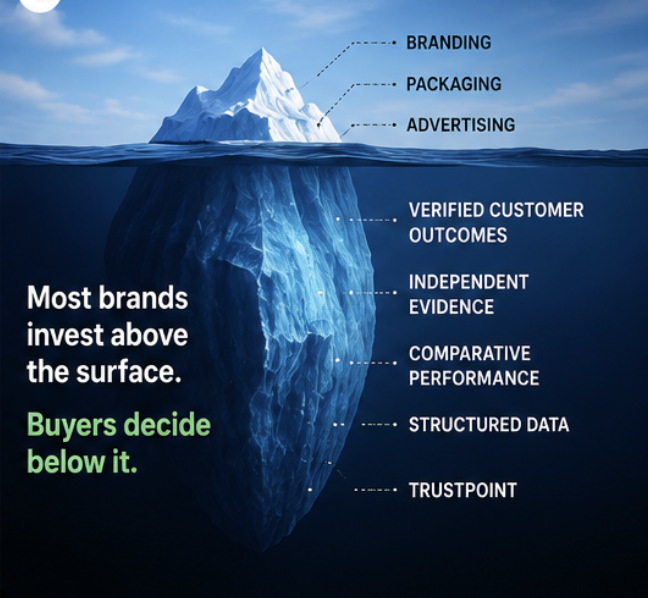
Fashion and apparel brands have the strongest Strategic Positioning of any sector assessed through the Market Authority Index, averaging 20.3 out of 25. They know how to present themselves. Brand identity, visual storytelling, and market positioning are what the industry does best.
But Proof and Validation averages just 14.7 out of 25. That is a 5.6-point gap between how well these brands present and how well they prove what they deliver. And with a standard deviation of 4.9, the variation is significant, some brands have invested in proof, most have not.
For a category where distinctiveness is everything, the brands that can verify their customer experience have a measurable advantage over those that rely on presentation alone. The gap is wide enough that early movers on proof stand out immediately.
When a buyer asks "best plus-size clothing brand" or "sportswear that actually lasts," AI tools like ChatGPT, Perplexity, and Google's AI Overviews look for structured, verifiable evidence. They cannot feel the fabric, try on the fit, or experience the checkout process. They need independently verified data to recommend with confidence.
Most fashion brands rely on social media presence, influencer partnerships, and platform reviews to build visibility. But AI systems cannot reliably distinguish between a brand that photographs well and one that genuinely delivers a better experience. They need structured data: documented methodology, verified sample sizes, and published results from real customers.
TrustPoint provides that data. Each TrustPoint is published with schema.org Dataset markup, including a named external creator, verified sample size, and a public report URL. For fashion brands, this means your customer experience stops being an assumption and becomes a citable, verifiable signal in the AI-driven discovery journey.
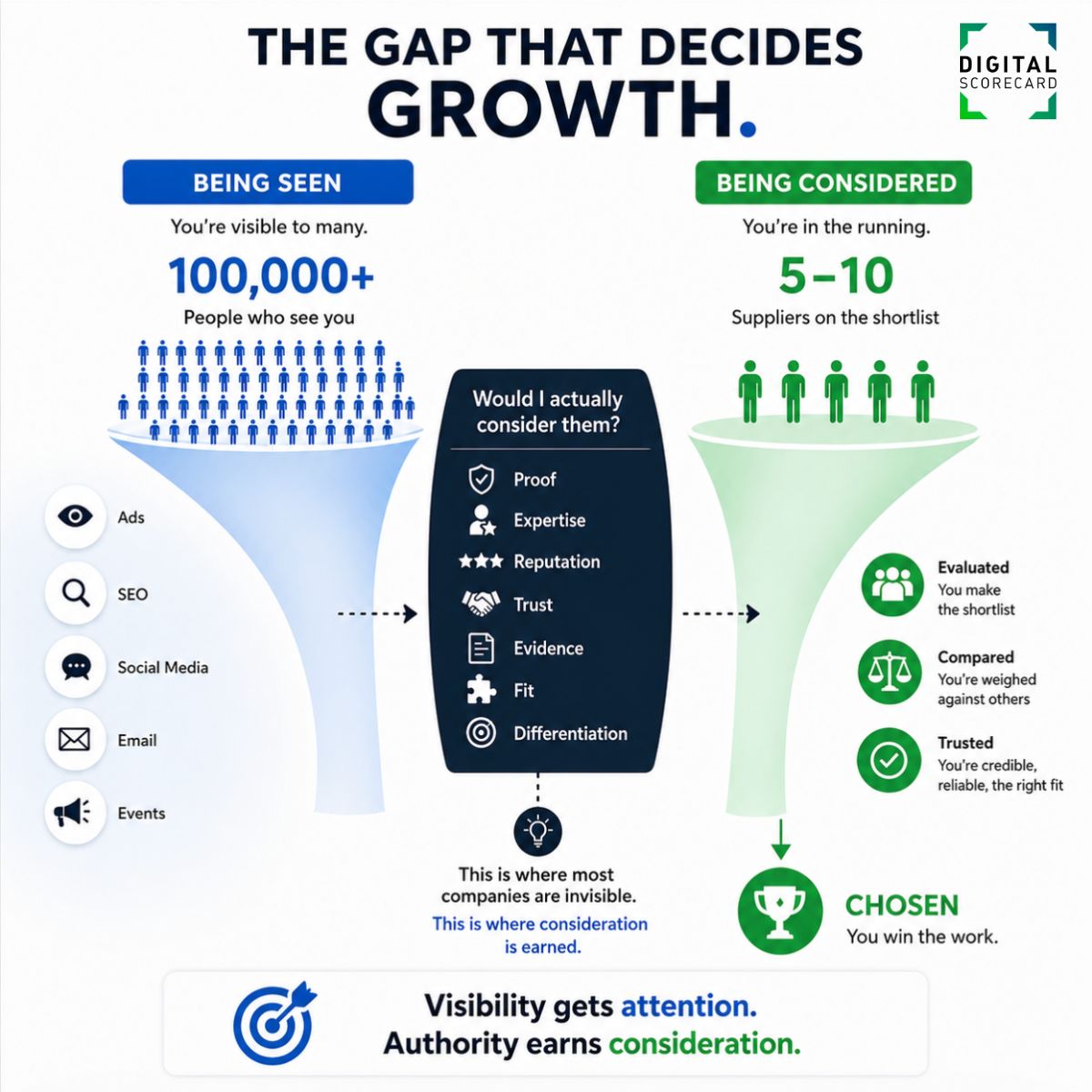
In fashion, the product is only part of the decision. Buyers care about fit, quality, and design but they also care about how the clothing makes them feel, how easy the brand is to buy from, and whether the experience is worth repeating. Those emotional and experiential signals are what separate a one-time purchase from a loyal customer.
TrustPoint verifies all of it. Not just product satisfaction ratings, but how customers feel about their purchase, how the brand compares to alternatives they have tried, and whether they keep coming back. For fashion brands, this turns the softer, harder-to-prove side of the customer relationship into structured, independently verified evidence.
The result is a proof layer that goes beyond "good product" and into "good experience" which is where loyalty is built and where distinctiveness is actually felt by the buyer.
Loyalty is the ultimate validation for a fashion brand. It means the buyer chose you once, experienced the product and the service, and chose you again. In a category with endless alternatives, repeat purchasing is the strongest signal of genuine quality.
TrustPoint captures and verifies loyalty signals that brands typically only see in internal analytics. How long customers have been buying. How many items they own. How frequently they wear the products. Whether they recommend the brand to others. When these signals are independently verified and published, they become credible evidence that no amount of marketing can replicate.
For fashion brands with genuinely loyal customer bases, TrustPoint turns that loyalty from an internal metric into an externally verifiable competitive advantage.
Buyers see verified outcomes that cut through the noise. Not a curated testimonial, not an influencer partnership, but independently verified findings: “72.5% of customers are very happy with their clothing” based on 1,421 verified responses. Or “over 40% of customers have been buying for more than ten years.” Those signals carry weight precisely because they were not produced by the brand and cannot be edited or influenced.
On product pages, in product descriptions, across comparison platforms, and inside AI-generated recommendations, these verified outcomes become the strongest signal a buyer encounters. They answer the two questions that matter most in fashion: will I feel good in this, and is this brand worth committing to?
Fashion invests more in perception than almost any other industry. But when every brand looks good, looking good stops being a differentiator. TrustPoint measures what happens after the purchase, not what the brand presents, but what the customer experiences.
Not reward based. TrustPoint results cannot be purchased or influenced. The outcome reflects what customers actually report about the product, the fit, and the experience.
Verified using data. Every TrustPoint is based on independently administered research with a documented methodology and verified sample. For fashion, where the emotional and experiential side matters as much as the product itself, independent verification turns feeling into measurable evidence.
Independent. Digital Scorecard administers the research, analyses the data, and publishes the result. The brand cannot edit, filter, or suppress findings.

AliceDot, a Swedish plus-size fashion brand, verified through 1,421 customer responses that 72.5% are very happy with their clothing, with a further 25.7% happy, a combined satisfaction rate of 98.2%. The DCI score of 83.15 confirms that 59.1% rate AliceDot better or much better than alternative retailers, while 79.7% confirm good value for money. With a recommendation rate of 92.9%, AliceDot’s TrustPoint demonstrates that distinctiveness in fashion is not just about the clothing — it is about how the buyer feels, and independently verifying that feeling creates a competitive signal no campaign can match. View the AliceDot. TrustPoint here.
Dobsom, a Swedish sportswear brand built on function, fit, and ease of use, verified through 708 customer responses that 98.9% recommend the brand and rate their overall experience 9.94 out of 10. The loyalty data is exceptional: over 40% of customers bought their first Dobsom item more than ten years ago, over 50% own four or more items, and almost 90% use their Dobsom clothing regularly. For a fashion brand, independently verified loyalty at this scale is the strongest possible proof that the product delivers on its promise, not once, but consistently over years. View the Dobsom TrustPoint here.

See more details from 3 businesses and how TrustPoint can be used.
These principles are enforced through issuance criteria. If they are not met, no TrustPoint is issued. Methodology alone does not qualify an insight as a TrustPoint. Issuance depends on observed, repeatable customer patterns.
Only real, verified customers are included. No exceptions.
We do not rely on simple ratings. We use a structured, in-depth questioning framework.
Each TrustPoint is adapted to suit your business, industry and objectives.
Results cannot be bought, influenced, or edited. Each client can decide to publish their results or not.
TrustPoint was refined over years of real-world application before launch.
A structured methodology that ensures statistically robust results and full credibility.
You receive a full report with highlights you can immediately use in sales, marketing, and positioning. You decide what to make public and are always in control of how to use the results.
You will be able to use the TrustPoint badge as a confirmation of your results.
While you cannot influence the results, you can decide on what aspect to illustrate. We will not show you in a bad light and will only show what you want.
The primary reason for doing a TrustPoint is to illustrate how customers benefit from your products or services.
A TrustPoint helps your AI listing and strengthens your position by
All TrustPoint work is based on a robust methodology and all results are statistically sound. This is essential for the TrustPoint badge to have real value.
In some sectors, our findings have closely mirrored clinical trial outcomes. While TrustPoint is not a clinical trial, we apply rigorous standards to ensure accuracy, reliability, and trust.


The Differential Comparison Index (DCI) is a benchmark used to measure how well a product performs compared to other alternatives customers have tried. It is calculated from verified customer responses that compare their experience with the product to similar products on the market.
DCI is scored on a scale of 0 to 100:
A high DCI score indicates that the product not only satisfies customers but outperforms other options they have used. This provides an independent competitiveness measure beyond standard satisfaction ratings.
There are three TrustPoint levels, based on your business needs. All include a verified TrustPoint and the difference is depth and detail.
When you purchase a package we always discuss the options with you before we start so you are not locked into one package.
We offer a clear money-back guarantee.
If you’re not satisfied with your TrustPoint, you can request a refund.
As we have done this for a while we have seen that clients see the value and even sales during the process itself. That confidence allows us to remove the risk for you by offering a simple money back guarantee.