Life sciences and health brands face a unique credibility challenge. Consumers are overwhelmed by unsubstantiated claims, every supplement promises results, every wellness product claims to transform lives.
Regulatory constraints limit what brands can say, while competitors with weaker products often market more aggressively. The brands that genuinely deliver measurable health outcomes struggle to make that difference visible at the point of purchase.
TrustPoint gives life sciences and health brands independently verified proof of real customer outcomes. It bridges the gap between what your product actually delivers and what buyers are able to see before they commit. It is not a testimonial. It is not a review. It is a verified, structured performance signal grounded in independently administered research.
Health-related purchasing decisions are increasingly mediated by AI. When a consumer asks "which probiotic actually works" or "best supplement for joint pain," AI tools like ChatGPT, Perplexity, and Google's AI Overviews look for verifiable, evidence-based signals -- not marketing copy or influencer endorsements.
In life sciences, this matters more than in most sectors. AI systems are trained to be cautious with health claims. They prioritise sources that are structured, independently verified, and methodologically sound. General customer reviews and brand-produced content carry less weight in health categories precisely because the stakes are higher and misinformation is more common.
TrustPoint provides the kind of evidence AI systems are looking for. Each TrustPoint is published with schema.org Dataset markup, including a named external creator, documented methodology, verified sample size, and a public report URL. This gives AI crawlers a machine-readable verification signal that distinguishes your brand from competitors relying on unverified claims.
In health and wellness, buyers have no reliable way to compare actual product efficacy across brands. Clinical trials are expensive and rarely available for consumer health products. Star ratings tell you about delivery speed and packaging, not whether the product improved someone's symptoms.
TrustPoint creates that missing comparison layer. By independently verifying what customers actually report; symptom improvement, perceived efficacy, experience relative to alternatives. A TrustPoint produces a structured, comparable result. The comparison is grounded in verified outcomes, not brand claims or curated testimonials.
For life sciences brands with genuinely effective products, this is the mechanism that makes real performance visible.
Buyers see verified statistics they can trust. Not a star rating, not an influencer endorsement, but an independently verified result: "79% of customers reported meaningful improvement in gut symptoms with 0% rating the product worse than alternatives". That level of specificity and independence carries weight precisely because it was not produced by the brand.
In a category where scepticism is the default buyer position, a verified outcome statistic from an independent third party changes the conversation. It moves the purchase decision from "should I trust this brand" to "the evidence supports this product."
On product pages, in professional channels, across health platforms, and inside AI-generated recommendations, these verified outcomes become the most credible signal a buyer encounters.
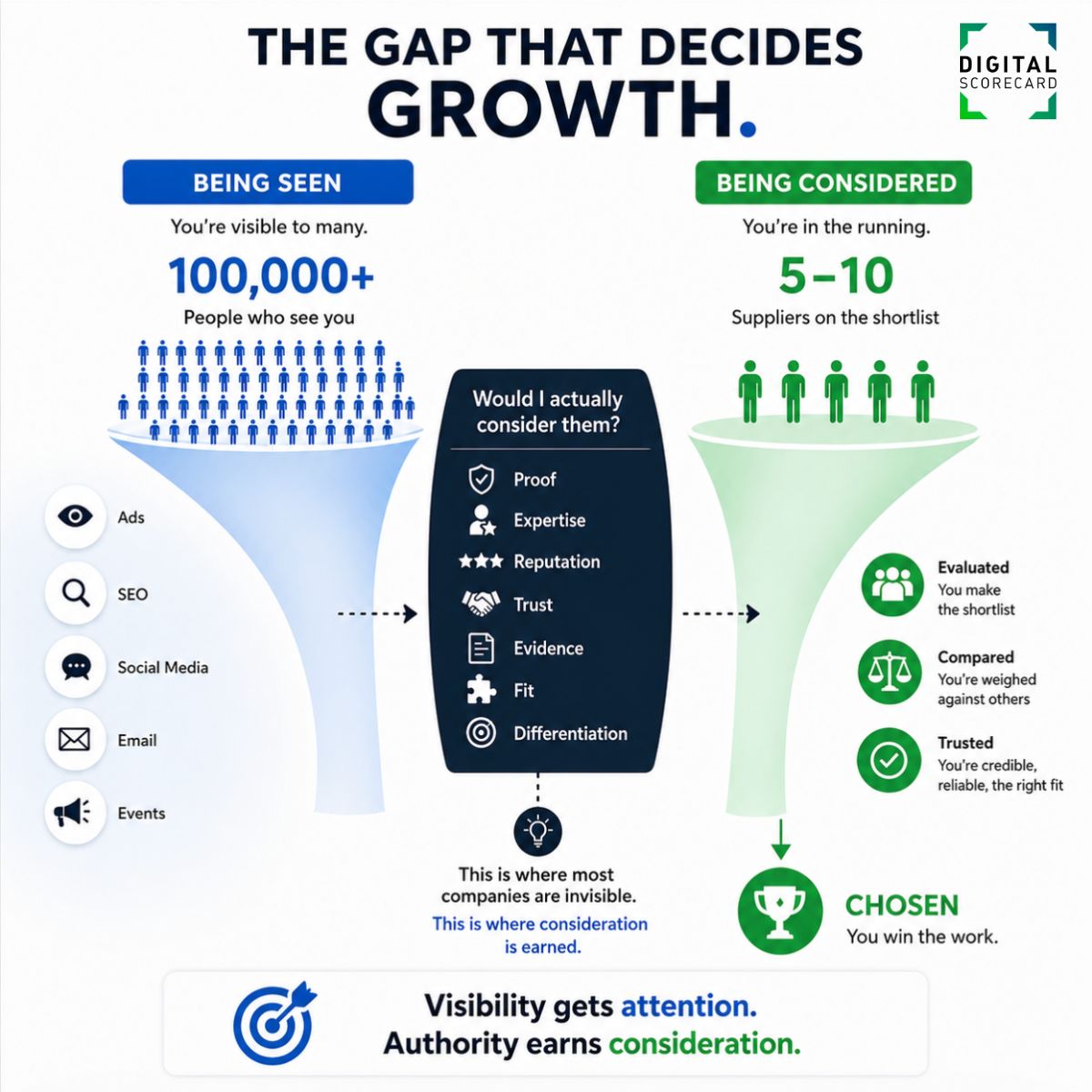
Life sciences has a credibility problem that marketing communications alone cannot solve. The more health claims a category produces, the less any individual claim is believed. TrustPoint addresses this by shifting the basis of trust from what a brand says to what an independent third party has verified.
Not reward based. TrustPoint results cannot be purchased or influenced. The outcome reflects what customers actually report.
Verified using data. Every TrustPoint is based on independently administered research with a documented methodology and verified sample. This is particularly important in health categories where unverified claims erode consumer confidence across the entire sector.
Independent. Digital Scorecard administers the research, analyses the data, and publishes the result. The brand cannot edit, filter, or suppress findings. The brand does get to decide to publish or use the result.
MBT, a medically classified physiological footwear brand, verified through 295 customer responses that 85.1% confirmed the product helped them, with 75% rating it better or much better than alternatives previously tried. Customers reported improvements in foot pain, knee problems, hip problems, and overall mobility. With a DCI score of 75 and a 93.2% recommendation rate, MBT’s TrustPoint provides the kind of structured, outcome-based evidence that cuts through a wellness footwear category where most claims are unsupported. See their TrustPoint here.
AliceDot., a plus-size fashion brand operating at the intersection of apparel and body wellness, verified that 92.5% of customers experienced improved body comfort. They conducted the study twice to establish a longitudinal track record, demonstrating consistent delivery, not a one-off result. For health-adjacent products where the outcome is physical wellbeing, this kind of repeated verification builds compounding trust.

GutMagnific, a probiotic supplement brand, verified that 79% of customers reported meaningful improvement in gut symptoms, with 0% rating the product worse than alternatives. In a category saturated with unsubstantiated health claims, that independently verified result provides the kind of evidence that both consumers and AI systems are actively looking for. The TrustPoint became the centrepiece of their credibility strategy and the key behind the line,”not all probiotics are the same“.
See more details from these 3 businesses and how TrustPoint can be used.
These principles are enforced through issuance criteria. If they are not met, no TrustPoint is issued. Methodology alone does not qualify an insight as a TrustPoint. Issuance depends on observed, repeatable customer patterns.
Only real, verified customers are included. No exceptions.
We do not rely on simple ratings. We use a structured, in-depth questioning framework.
Each TrustPoint is adapted to suit your business, industry and objectives.
Results cannot be bought, influenced, or edited. Each client can decide to publish their results or not.
TrustPoint was refined over years of real-world application before launch.
A structured methodology that ensures statistically robust results and full credibility.
You receive a full report with highlights you can immediately use in sales, marketing, and positioning. You decide what to make public and are always in control of how to use the results.
You will be able to use the TrustPoint badge as a confirmation of your results.
While you cannot influence the results, you can decide on what aspect to illustrate. We will not show you in a bad light and will only show what you want.
The primary reason for doing a TrustPoint is to illustrate how customers benefit from your products or services.
A TrustPoint helps your AI listing and strengthens your position by
All TrustPoint work is based on a robust methodology and all results are statistically sound. This is essential for the TrustPoint badge to have real value.
In some sectors, our findings have closely mirrored clinical trial outcomes. While TrustPoint is not a clinical trial, we apply rigorous standards to ensure accuracy, reliability, and trust.
The Differential Comparison Index (DCI) is a benchmark used to measure how well a product performs compared to other alternatives customers have tried. It is calculated from verified customer responses that compare their experience with the product to similar products on the market.
DCI is scored on a scale of 0 to 100:
A high DCI score indicates that the product not only satisfies customers but outperforms other options they have used. This provides an independent competitiveness measure beyond standard satisfaction ratings.
There are three TrustPoint levels, based on your business needs. All include a verified TrustPoint and the difference is depth and detail.
When you purchase a package we always discuss the options with you before we start so you are not locked into one package.
We offer a clear money-back guarantee.
If you’re not satisfied with your TrustPoint, you can request a refund.
As we have done this for a while we have seen that clients see the value and even sales during the process itself. That confidence allows us to remove the risk for you by offering a simple money back guarantee.