
An independent benchmark of market authority across European SMEs. 46 assessed brands, plus 45 Swedish sector leaders, 11 sectors, 5 markets, 122 competitor comparisons. Updated dynamically as new assessments are completed.
Most brands possess more credibility than the market realises. Structural foundations consistently outperform external perception and authority signals.
The weakest area across the entire dataset is Proof and Validation — social proof, case studies, and independently verified outcomes.
36 out of 46 assessed brands trail direct sector competitors by an average of 8.2 points.
Transport and Industrial brands show the sharpest split between operational soundness and market recognition — 31 and 22 points respectively.
Only 4 brands reached Strong Authority status (80 or above). The majority are categorised as Established or Developing.
79% of brands score higher on Structural Confidence than on Human Authority.

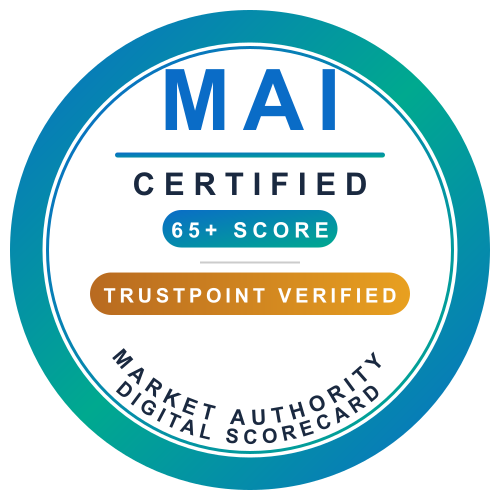
Market Authority Index of 65 - 69.
Meets the MAI Certified threshold. Demonstrable authority with defined areas for growth.
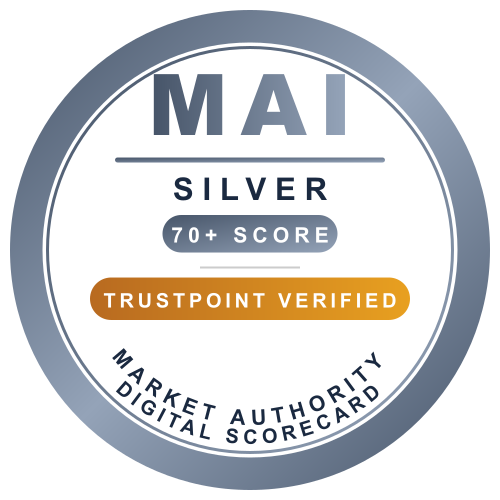
Market Authority Index of 70 - 79.
Strong market authority. Well established with clear competitive positioning.
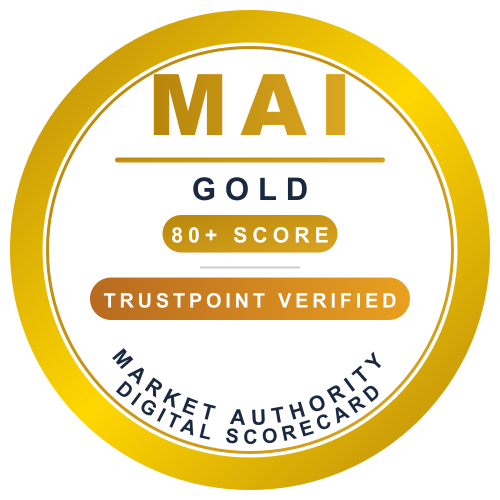
Market Authority Index of 80 and above
Exceptional market authority. Consistent across all dimensions of trust, positioning, and proof.
The chart below maps 45 independent Swedish SMEs across five sectors — Home and Interior, Fashion, Health and Wellness, Hospitality, and Professional Services. Each bubble is a brand. Bubble size reflects company scale: micro, small, or medium. Colour reflects sector. The two reference lines divide the chart into quadrants. Top-right is where you want to be — high perception and high structural credibility. Most brands are not there yet. Hover over any bubble to see the brand, its estimated MAI score, and its size tier.
A few things stand out. Home and Interior brands cluster consistently in the upper right — the strongest authority culture of any sector in the dataset. Professional Services brands sit consistently lower on the horizontal axis, confirming the perception gap identified across the full assessment dataset. The standout data point: Treehotel, a micro-sized hospitality brand with fewer than 10 employees, sits higher than most small and medium brands across all sectors. Brand equity, built carefully over time, can significantly outpace company size.
Average MAI, Human Authority, and Structural Confidence scores across all 11 sectors in the assessed dataset. Scores are based on completed MAI Pro assessments and updated as new assessments are added.
Market Authority is the combination of Human Authority and Structural Confidence, a combination of how you are seen and also how much confidence a buyer is likely to have in buying from you.
A measure of your market authority (human + structural) with a reference to your competitors.
How strongly your brand commands trust and authority in your market.
How strongly buyers trust and believe in your brand.
How strongly your business structure signals credibility and reduces buyer risk.
Calculated from external perception signals including online reviews, ratings, social proof, brand mentions and thought leadership presence — how the market sees and validates your brand.
Calculated from operational and digital signals including website quality, search visibility, business verification, pricing clarity and trust indicators — the evidence buyers find when they look closer.
How market authority varies across different business models — B2B, B2C, DTC, and mixed commerce types.
17 brands in the current dataset have reached the MAI Certified threshold — a score of 65 or above, independently assessed. Three tiers are awarded: Certified (65–69), Silver (70–79), and Gold (80 and above).
A PDF summary of the key findings, sector patterns, and what they mean for SMEs competing for buyer attention. No form, no gate — just the data.
MAI assessment is free. To request an assessment for your business, just complete the form and you will get your MAI report within 24 hours.